

By Angel DeJesus • July 9, 2026
When the U.S. Supreme Court decided Miller v. Alabama in 2012, I was incarcerated at Sussex II State Prison in Virginia. At that point, I had already spent nearly two decades behind bars for a crime I committed when I was 17 years old.
The ruling itself didn’t surprise me. It felt like part of a larger shift in how the country was beginning to think about children in the legal system. What surprised me was the controversy that followed. In Virginia, there were endless debates about who the decision applied to and who it didn’t. Attorneys argued about it. People incarcerated argued about it. Many states seemed to interpret the ruling differently.
Miller held that mandatory life-without-parole sentences for children were unconstitutional. Many of us in Virginia had life sentences, but the state argued that because we technically had access to geriatric release, our sentences weren’t mandatory life after all. That ambiguity left a lot of us in limbo. But after reading the decision over and over, I kept coming to the same conclusion: there was hope we could come home.
For the first time in years, I could imagine what freedom might look like. I wasn’t alone — other guys inside felt the same way.
What mattered most to me wasn’t whether the case would immediately get me out of prison. What mattered was the broader shift taking place in how children were being understood to be different–and Miller was a pivotal part of that shift.
I personally did not receive direct relief through Miller. I filed challenges, and I watched other people challenge their sentences too. Some cases moved forward, others were denied, and many of us continued waiting. But even though Miller did not directly lead to my release, it changed the conversation in ways that eventually helped pave the way to freedom for myself and countless others. The same system that said I was irredeemable as a child recognized that irredeemability is “incompatible with youth.” Miller pushed states to reconsider how they treated people who had committed crimes as children. Years later, Virginia passed legislation that created parole opportunities for people sentenced as children. Around the same time, I had filed a clemency petition. In 2022, after serving 27 years in prison, I was released through a conditional pardon. Looking back, I see Miller as one piece of a much larger movement that made my second chance possible.
Since coming home, I’ve dedicated my life to helping young people avoid the same mistakes I made. I work at an organization that runs programs in over 50 schools across the state, mentoring children, offering crisis intervention, facilitating restorative justice circles, helping support young people returning from juvenile detention, and advocating for policies that give children opportunities for growth and redemption. I spend much of my time speaking with legislators, community leaders, and organizations about the importance of second chances.
When I think about Miller v. Alabama today, I don’t just think about a court case. I think about how society’s increasing recognition that children are capable of change inspired so many of us behind bars to come home and work with the youth of today. And I think about how that work is changing the trajectory of our lives, our communities, and our future.
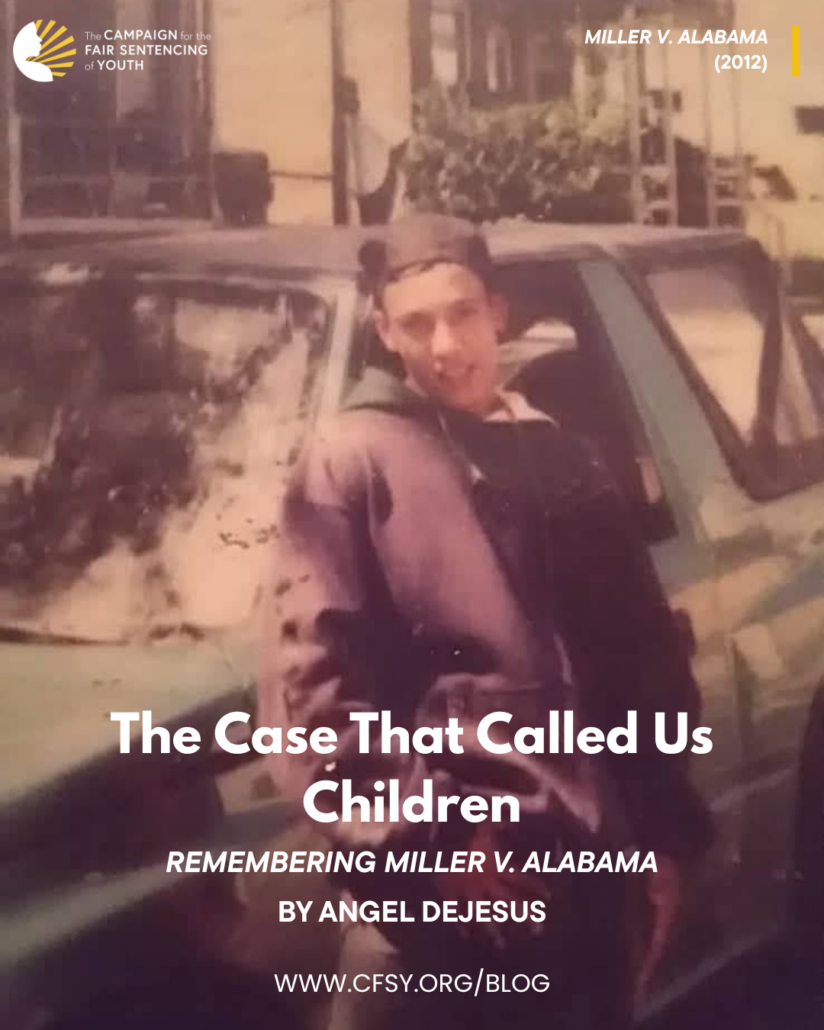
Angel DeJesus was condemned to die in prison at 17 years old. After serving 27 years, Angel was one of only 8 people whose sentence were commuted, receiving a pardon from Governor Northrup in January 2022. Since coming home, he developed a program called Creating a Safer Environment (CASE) – for men who are incarcerated in Virginia and struggling with mental health issues, based on peer mentoring and informal counseling. Angel is also a member of the Incarcerated Children’s Advocacy Network (ICAN).