

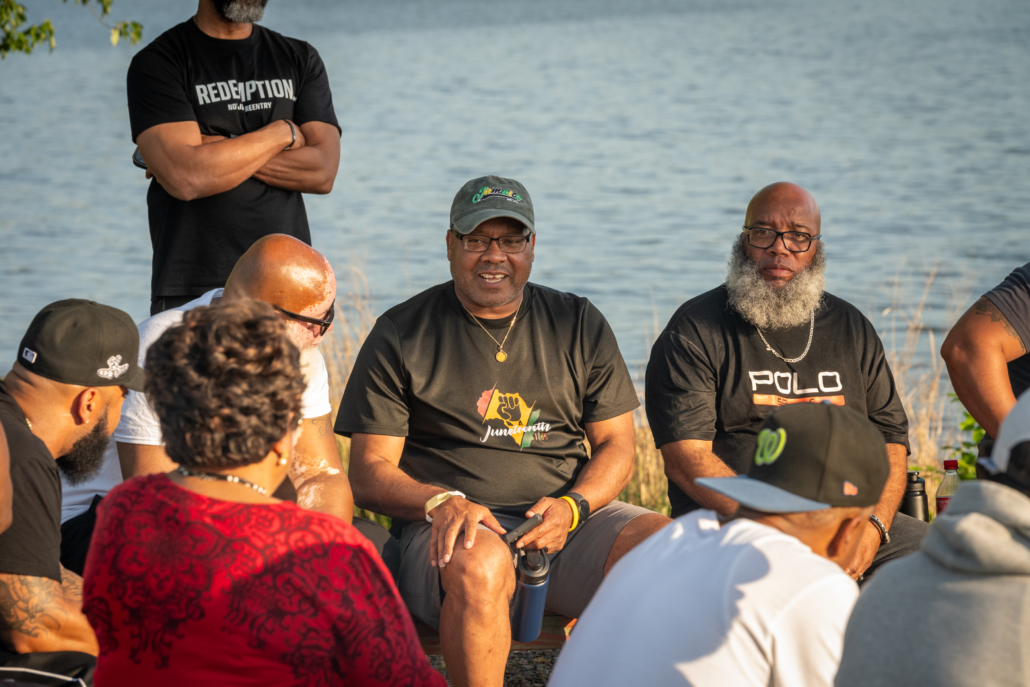
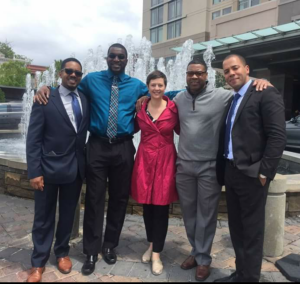
June 19, 2026 • Pictured: John Pace in Juneteenth Gear at CFSY’s 2026 Community Care Retreat.
I Was 17 When I Was Sentenced To Life Without Parole. After Serving 31 Years In Prison, This Is What Juneteenth Means To Me.
When I think of Juneteenth, I think about both the joys of freedom and the painful reality that freedom was deliberately withheld from Black folk long after they were declared to be free. On June 19, 1865, news of emancipation finally reached enslaved Black Americans in Galveston, Texas. The news came more than two years after the Emancipation Proclamation had been signed.
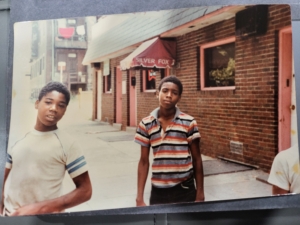
I, too, know the joys of freedom and the painful reality of incapacitation, waiting for good news. As I reflect on this holiday, I cannot separate its history from my own life experience.
As a child, I was sentenced to life without parole. I served 31 years. I am one of an estimated 2,800 individuals who received this sentence as a child, most of whom were Black boys. In 2012, us life sentenced children recieved hopeful news through a series of Supreme Court decisions including Miller v. Alabama and Montgomery v. Louisiana. As SCOTUS declared mandatory life without parole sentences for children unconstitutional, nearly 1,300 individuals were successfully resentenced and released. Most were incarcerated for 30 years on average, like me.
While we were called “superpredators” as children and later labeled “juvenile lifers,” hundreds of us now call ourselves community builders. We learned to find purpose in places designed to strip people of hope. We discovered our capacity to grow beyond our worst mistakes and to contribute meaningfully to the lives of others. We survived prison, emerging with a deeper understanding of humanity, accountability, forgiveness, and resilience. The legacy of slavery endures through systems of oppression but the legacy of Juneteenth endures through us.
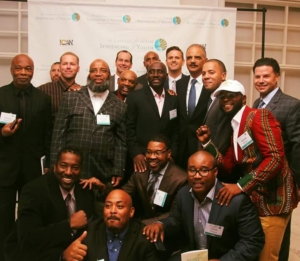
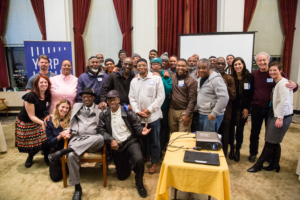
Today I use my freedom to break cycles of violence and trauma in marginalized communities. I’m a member of the Campaign for the Fair Sentencing of Youth’s Incarcerated Children’s Advocacy Network. I’m the Associate Director of Reentry & Engagement at the Youth Sentencing & Reentry Project (YSRP). I have the privilege of working with students through the Inside-Out Prison Exchange Program. I am not the exception but the norm: surviving decades of prison since childhood has shaped many of us into compassionate leaders, mentors, advocates, and healers. The road was difficult, often unjust, and certainly not one I would wish upon any child. Yet having traveled it, many of us now dedicate our lives to ensuring that future generations do not have to walk the same path.
For me, Juneteenth is a reminder of the resilience of Black people in the face of unimaginable suffering, and a reminder that true freedom requires more than legal declarations. Despite the overall decrease in JLWOP sentences since the landmark Supreme Court decisions, the proportion of Black children serving this sentence has risen from 61% to 76.6%. As of 2024, over two-thirds of those serving life without parole since they were children have waited for a resentencing hearing for over 12 years. Freedom requires dismantling the structural barriers that continue to limit opportunity, dignity, and human flourishing. Juneteenth is both a commemoration and a call to action. It challenges us not only to celebrate freedom, but to also ask who has access to it, whose freedom remains constrained, and what responsibility we have to continue the unfinished work of justice.
The news of freedom took two years to reach Galveston. For me, it took thirty-one years to reach my prison cell. Our job now is to make sure it reaches everyone else. Happy Juneteenth.
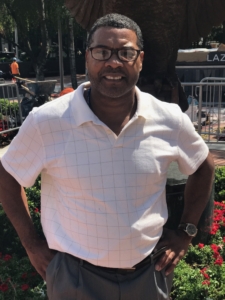
About the Author:
John Pace is a member of the Incarcerated Children’s Advocacy Network (ICAN). He currently serves as the Associate Director of Reentry & Engagement at the Youth Sentencing & Reentry Project (YSRP) in Philadelphia.